1933: Birth in October in Philadlephia. The son of Anna Rose Collins (Oct. 29, 1904–Nov. 10, 1949) and Leonard Anthony Bracken (Dec. 25, 1900–Dec. 3, 1961), while the family was living in Glenside, Pennsylvania.
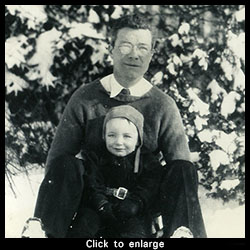
1936: Tony with his father Len Bracken Sr. at their Glenside home.
1943–1944: Attended Glenside Weldon School.
1945–1946: Attended Henry H. Houston Elementary School in Mount Airy.
1945–1948: Attended Chestnut Hill Academy through ninth grade.
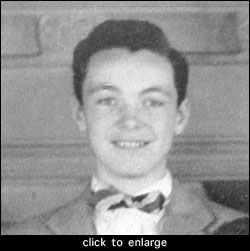
circa 1946–47: Worked as a ball boy for tennis tournaments at the Philadelphia Cricket Club in Chestnut Hill.
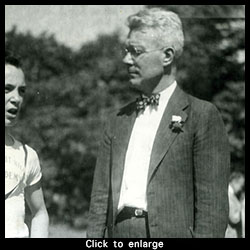
1948: Photograph with Tony, his sister Susan and their father Len Bracken Sr. on May 31, at Chestnut Hill Academy’s Blue & Blue Field Day—Tony was captain of the Dark Blue team.
1949: Death of his mother Anna on Nov. 10 from a heart attack; buried in Holy Sepulchre Cemetery in Philadelphia.
1948–1951: Attended William Penn Charter School in Philadelphia.
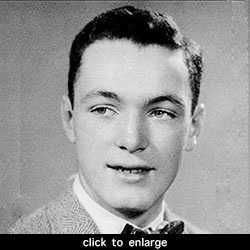
1950: Worked for the summer at a combined ice cream parlor and candy store in Ocean City, New Jersey.
1951–1955: Attended the U.S. Naval Academy in Annapolis, where he lettered as manager of the wrestling team (he was prevented from competing because of a poorly reset dislocated shoulder stemming from a high-school football injury).
1951: Photograph of Tony and his father Len Bracken Sr. in Annapolis.
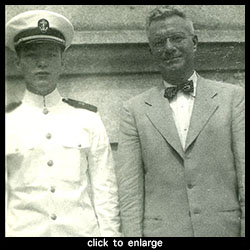
1955—June: Graduated from the United States Naval Academy with a bachelor of science degree and given the rank of ensign by the Secretary of the Navy. His studies were rooted in the academy’s Department of Marine Engineering.
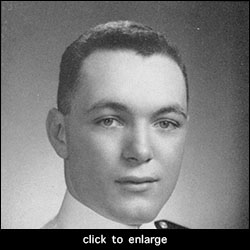
1955: Worked with his father in the summer paving the Pennsylvania Turnpike.
1955: Attended aviation pre-flight school at Naval Air Station (NAS) Pensacola and primary flight training at nearby NAS Whiting Field, learning to fly on North American Aviation T-6 Texan aircraft.
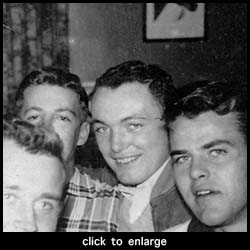
1956: After advanced flight training on other aircraft in Corpus Christi, Texas, Bracken earned his “Wings of Gold,” becoming a naval aviator, in November 1956.
1956–1959: His first assignment was in Iceland as a long-range patrol pilot, flying the Lockheed P2V-5 Neptune to numerous destinations in Europe with Patrol Squadron 16, known as VP-16, which was based in Jacksonville. He entered the “Realm of the Arctic Circle” just after officially becoming a lieutenant (junior grade) while piloting a P2V Neptune in December 1956. His second deployment with the VP-16 squadron was to Morocco and Spain.
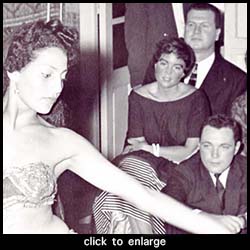
1959–1960—May 1959 to August 1960: He transitioned to carrier-based aviation on his second assignment with Fleet Air Support Squadron 3 (FASron 3), based out of Norfolk, flying Grumman C-1 Traders to carriers in the Atlantic Ocean, delivering mail and cargo, as well as transporting personnel.
1959: Married Martha Ella Dobarzynski in May at Saint Edward’s Catholic Chapel on Naval Air Station Jacksonville.
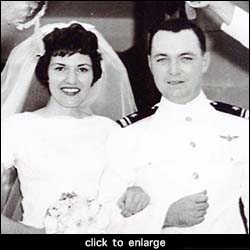
1959—June: Honeymoon at St. Simons Island in Georgia. The newlyweds stayed at the King and Prince Hotel.
1960: As part of a USS Wasp (CV-18) “mercy mission” to the waters off the Congo, starting off for the South Atlantic in mid-July, Bracken was the first to fly into the strife-torn, newly independent country. He was chosen for his role to fly in and establish a liaison because of his French language skills. The United States would eventually install Mobuto Sese Seke after the western powers, likely Belgium, assassinated Patrice Lumumba.
1960—September 1960 to June 1962: Bracken was transferred to the Naval Intelligence School in Washington, D.C., where he would also become a qualified Russian language interpreter and translator.
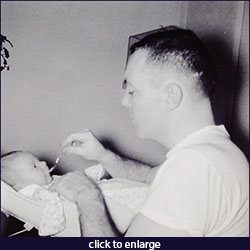
1961—January: Birth of son Leonard at Andrews Air Force Base.
1961—May: Member of the United States Naval Institute.
1962–1964—June 1962 to June 1964: stationed at the American Embassy Moscow as assistant naval attaché. During the October 1962 Cuban Missile Crisis, Bracken was worried that U.S. nuclear missiles would be launched on Moscow. Bracken would go on to travel extensively during this time, including a trip into Iran with the first CIA station chief in Moscow, Naval Attaché Paul Garbler.

1964—His work drew the ire of the Soviet government. Accusations of improper behavior involving observation of Russian military programs resulted in tit-for-tat travel restrictions of U.S. and Russian diplomats in Moscow and Washington.
The Associated Press photographed Bracken in an overcoat and fedora at the Copenhagen airport and labeled him “an American spy” while erroneously reporting that he had been declared persona non grata.

Some of these incidents were the subject of articles in the New York Times, The Philadelphia Bulletin (“Accused by Russians of Illegal Activities” and “Soviet Accuses Phila. Man, Three Others”), The Philadelphia Inquirer, Philadelphia Daily News, Facts on File, a United Press International report, and various other publications.
Bracken received a commendation from the U. S. Navy and a letter of appreciation from the U. S. Embassy in Moscow.
The Soviet denunciation of Bracken was formalized in the book Front of the Secret War. Bracken wrote about one of the incidents in a 2016 article in Shipmate magazine, although he neglected to mention that his photograph of the Ilushin IL-18 plane with the magnetic anomaly detector boom, which led to the Leningrad incident, was used on the cover of an internal U.S. intelligence magazine and was considered to be a major find.
1964—April to June: Bracken snapped his Achilles tendon while playing sports in Moscow. The family traveled to Wiesbaden, Germany, where Bracken spent several months at the U. S. Air Force Hospital recovering from the injury.
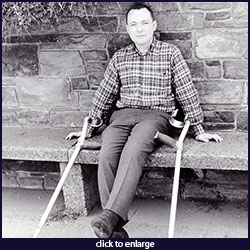
1964—June to August: stationed at Jacksonville Naval Air Station.
1964—September to December: Stationed at Norfolk Naval Air Station with the Fleet Airborne Electronics Training Unit (FAETU).
1965—January to March: Stationed at Key West Naval Air Station with Air Anti-Submarine Squadron 30 (VS-30) for training on Grumman S-2 Tracker twin-engine anti-submarine aircraft. The squadron was nicknamed the “Diamondcutters” for its ability to train pilots.
1965–1966—April 1965 to May 1966: Stationed at Naval Air Station Norfolk with Anti-Submarine Squadron 26 (VS-26), the “Lucky Tigers,” whose patch shows a tiger’s head eating a sub.
1965—Designated a Carrier Anti-Submarine Plane Commander.
1966–1967—June 1966 to May 1967: Stationed at Naval Air Station Quonset Point with Air Anti-Submarine Squadron 31 (VS-31), the “Top Cats,” whose patch depicts a cat in the clouds swatting a sub with its paw. Bracken would later become the commanding officer of this squadron.
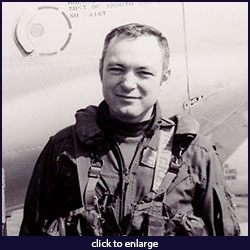
1967—June to October: Stationed at Key West Naval Air Station as an instructor with VS-30. Engine failure led to Bracken navigating his plane into a pond to soften the landing.
1967–1969: Neck surgeries at Bethesda Naval Hospital and convalescence in Key West.
1969—February to September: Returned to VS-30 in Key West as an instructor. Bracken was a boat owner and avid deep sea fisherman, featured in the local newspaper and competing in tournaments—during one completion, he was recognized for catching a sailfish.
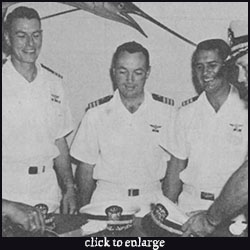
1969—July: Bracken promoted to commander. He and two other officers get the traditional “scrambled eggs” for their caps.
1969—September 1969 to March 1970: Special assignment in Athens, Greece. Officer in Charge of the Mobile Training Team 3-70, Joint United States Military Assistance Group (JUSMAG).
1970—March to April: Key West Wing.
1970—July: Awarded a Commendation Medal for meritorious service from September 1969 to March 1970.
1970—April to October: Naval Air Station Quonset Point in North Kingstown, Rhode Island.
1970–1971—October 1970 to February 1971: Assigned to VS-30 in Key West for training.
1971–1973—February 1971 to August 1973: Stationed at Naval Air Station Quonset Point, first as the executive officer and then the commanding officer of VS-31.
1971—September: Awarded his first Gold Star for meritorious achievement while serving as Executive Officer, Air Anti-Submarine Squadron 31 and as a pilot of an S-2E aircraft aboard the USS Intrepid.
1972—August: Designated as a Proven Intelligence Subspecialist by the Bureau of Naval Personnel.
1973—March: Reader’s Digest reported from the U.S.S. Intrepid on a patrol mission during which Bracken successfully located a Russian submarine.
1973—August: Awarded his second Gold Star for meritorious service from July 1972 to March 1973. Bracken was a well-liked commanding officer. Members of the squadron produced an elaborate, wood-covered photo album (pictured below) covering his command and their cruises to ports in Europe. All the men under his command are pictured and named in the U.S.S. Intrepid CVS-11 1972–1973 cruise book (pictured below).
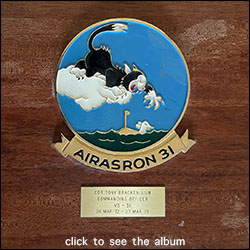
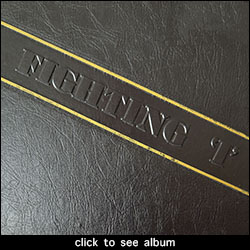
1973—September to December: Completed helicopter pilot training at Naval Air Station North Island in Coronado, California. Training was conducted on Bell TH-57A Sea Ranger and Huey UH-1 Iroquois helicopters.
1974–1975—January 1974 to June 1975: Based out of NAS North Island, served as commander of the West Coast based Carrier Anti-Submarine Air Reserve Group 80 (CVSGR-80), which comprised six squadrons. The recent helicopter training enabled Bracken to fly all the aircraft in the group and “lead from the front.” Commander Bracken received his third Gold Star for his service.
1975–1977—July 1975 to June 1976: completed a course of study at the National War College in Washington, D.C., which included travel to Africa and Japan. Bracken simultaneously earned a master of science degree in international relations at George Washington University. His thesis was on leadership succession patterns in the Soviet Union. Bracken was promoted to captain in 1976.
From July 1976 to June 1977, attended the Defense Intelligence School and Russian refresher course at the Department of State Language School.
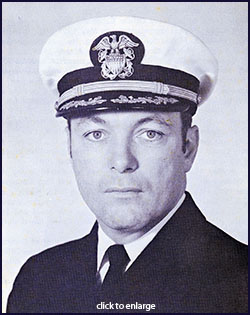
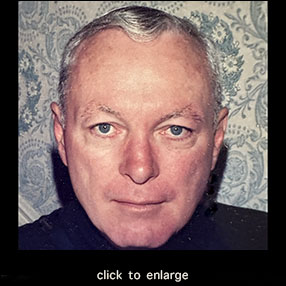
1976: Official photograph of Tony Bracken with captain stripes.
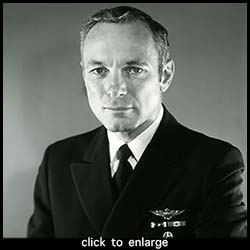
1977–1979—June 1977 to June 1979: Stationed at the American Embassy Moscow as naval attaché, where he was the official U.S Navy liaison to the USSR. He was a member of the U.S. delegation for navy-to-navy protocols for the prevention of incidents on the high seas and traveled extensively in the USSR as a naval observer. He played a key role in the Soviet rescue of a U.S. military aircraft that crashed in the Bering Sea in October 1978 off the Kamchatka Peninsula. Bypassing normal protocols, Bracken communicated the need for emergency assistance directly to the Russian chief of naval operations, thus saving precious time. Ten U.S. airmen were rescued by a Soviet fishing trawler after 12 hours in the freezing water. The incident is covered in the book (Adak: The Rescue of Alfa Foxtrot 586 by Andrew C.A. Jampoler; Naval Institute Press, 2011). Bracken relayed his first-hand account to his Naval Academy classmates in an email entitled “P-3 Ditching.”
1978: Bracken at a reception with Admiral Sergey Gorshkov, commander-in-chief of the Soviet Navy.
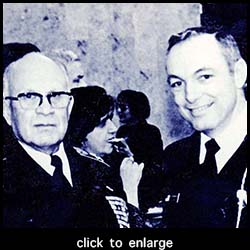
1979—March: Bracken and his son, among others, were drawn into an operation that likely originated within the Fifth Directorate of the KGB. After a series of meetings with a former merchant seaman turned dissident, Yuri Vlasenko, it was arranged for him to meet with a consular official. He entered the embassy with an explosive device strapped to his waist and threatened to detonate it unless granted safe passage out of the Soviet Union. After a two-and-half-hour standoff, Vlasenko was neutralized by the KGB’s Alfa Group in what would be the unit’s first operation.
For his service on this tour, Bracken was awarded the Defense Superior Service Medal: “By virtue of frequent travel and keen powers of observation he dramatically enhanced the accumulation of high priority information about many aspects of the enigmatic Soviet society,” the text accompanying the award said. “More specifically, his knowledge of the Soviet Navy enabled him to interpret major new Soviet initiatives in this area.”
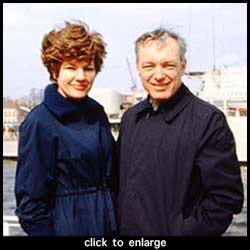
1979: Martha and Tony Bracken in Leningrad.
1979–1980—August 1979 to May 1980: head the Nuclear Negotiations Branch of the Office of the Chief of Naval Operations, where he was a planner for strategic treaties with the USSR. He was the representative to the Joint Chiefs of Staff for SALT II and other agreements. Bracken was awarded the Legion of Merit Medal for his “unique insight into Soviet motivations” as the principal Navy advisor on several nuclear arms negotiations. “His superior intellect and clarity of expression contributed significantly to the mission of the Strategic and Theater Nuclear Warfare Division during a period encompassing international events of historic importance,” the text accompanying the medal said.
1980–1983—July 1980 to October 1983: Worked in Virginia for TRW, Inc., Government Systems Division as a project engineer, managing six subcontractors conducting analyses of fleet operational efficiency. He was the technical manager for an award-winning proposal for a $6 million contract.
1983–1995—October 1983 to October 1995: Worked for Sippican, Inc. in Marion, Massachusetts. Bracken was the vice president of marketing from 1987 to 1989 and the director of marketing from 1983 to 1987, where he was responsible for new business development, administration, advertising, research, trade shows, joint ventures and the company’s sales representative network. The overseas sales organization that he established more than doubled the company’s foreign sales. Bracken negotiated and coordinated manufacturing licensing agreements with Great Britain and Japan. He set up the company’s Washington, D.C., office to track and support contracts with government agencies and Capitol Hill.
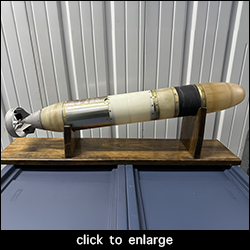
Sippican manufactured devices such as the submarine detection sonobuoy pictured below (roughly 36” x 5” and weighing 40 pounds). Bracken continued working with the company for several years as a consultant and was able to travel on commercial airplanes with a shell of the device until restrictions were imposed following the 9/11 attacks in 2001.
1997–2005: Served on the executive committee of the Washington Metropolitan Golf Association, including as treasurer—a volunteer position. Officiated and conducted tournaments for the U.S. Golf Association in the Washington area.
1999–2000: Bracken researched and wrote 12 monthly articles for the Lake Barcroft Newsletter tracing the fifty-year history of the community.
2001: Published Lake Barcroft History, a book based on his newsletter articles and photographs commissioned by Stuart Finley. Copies were sold through the Lake Barcroft Woman’s Club, generating several thousand dollars for the club’s charities.
2001–2008: Appointed by the Commonwealth of Virginia as one of three trustees to the Lake Barcroft Watershed Improvement District (WID), a volunteer position. Bracken assumed duties of treasurer for the WID, which is a governmental subdivision exercising public powers to maintain and operate the Lake Barcroft Dam and the lake’s water resource.
2009–2016: Volunteer supporting the local Neighborhood Watch organization by conducting patrols.
2013–2016: Volunteer at Lake Barcroft Villages, an organization to help seniors remain in their homes.
2014: Bracken received a distinguished service award from the Fairfax County Historical Society for his 2001 book, Lake Barcroft History.
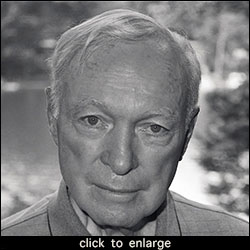
2015–2018: Bracken had a heart valve operation in December 2015 and a laminectomy in September 2016. Adverse effects from anesthesia were noted following both operations and his health began to decline. The Brackens moved to The Kensington Falls Church in March 2017 where they received excellent care. They returned home for day visits from time to time. Martha passed away on August 3, 2018, and Tony followed 45 days later, on September 25, as a result of heart congestion. At Martha’s funeral and in subsequent days, family, friends, military colleagues and neighbors paid visits to Tony. His funeral was held at Queen of Apostles Catholic Church. He was buried, with Martha, at Arlington National Cemetery with full military honors on November 15, 2018.
2019: A respectful obituary for Bracken was presented in the January–February edition of Shipmate magazine.